Portræt: Aurelio Raposo – from the bandstand to the bar
Bartender, Brand Ambassador and consultant at Fratelli Branca / Conaxess Trade
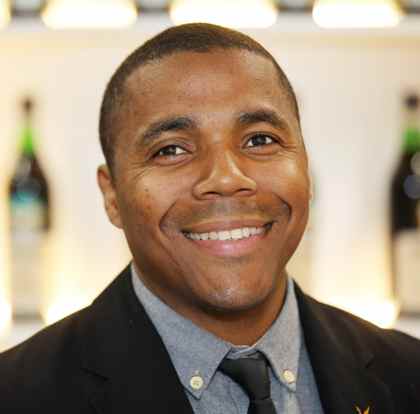
Aurelio Raposo first saw hospitality from a stage in Brazil, playing in a restaurant house band. Nine years after his first bar job in Copenhagen, he works as a bartender, Brand Ambassador and consultant — and credits his grandmother in the Pre-Amazon with teaching him what hospitality really means.
Fakta
NavnAurelio RaposoAlder36TitelBartender, Brand Ambassador & consultantArbejdspladsFratelli Branca / Conaxess TradeByCopenhagen, BrazilÅr i branchen9PriserDanish Daiquiri competition, Hernö Gin Award, Freestyle Mixology (2023); Rising Star-nominering, Bartenders' Choice AwardsFrom the stage to the bar
How did you first get into the bar, restaurant or drinks industry?
My first introduction to the industry came through music. Back in 2007, in Brazil, I joined the house band of a Japanese bar and restaurant called Kitaro. We played five days a week, sometimes for six hours a night. From the stage, I could see the whole operation — the bar, restaurant, staff and guests.
In Brazil, live music is very much part of bar and restaurant culture, so we weren't separate from the experience; we were part of it. That was my first connection to hospitality.
How has your journey been from your first job in the industry to what you do today?
My journey has been quite eventful. In 2017, while living in Copenhagen, I was playing music at a café on Blågårdsgade in Nørrebro. One of the owners wanted to change the concept and asked me to be part of it. We were playing a lot of bossa nova, I had a strong network in the Latin American community, and I loved the idea of having a place where I could host live music. That became Amazonia Cocktail & Kitchen and my first actual job in the industry.
From there, things happened fast. I worked everywhere from beer bars and restaurants to events, high-end hotels and cocktail bars, while cocktail competitions opened another side of the industry to me. Eventually, that journey led me into brand advocacy.
Today, I work as a bartender, Brand Ambassador and consultant. I'm still amazed by how quickly it all happened, and I'm extremely grateful for the unexpected opportunities along the way.
Has there been a particular moment, job, person or experience that has had a major impact on your career?
Personally, nothing has changed me more than becoming a father. It changed my perspective on responsibility, time and what really matters.
Professionally, my time as Bar Manager at The Union Local had a huge impact on me. It was a small bar, but at the time it was the only place I wanted to be. I spent hours there developing menus, preparing for competitions and experimenting with drinks. I also had enormous freedom in how we served people and how I wanted the bar to feel. I'll always be grateful to my former bosses, Nicholas Dave Lytkjen Peeters and Paul Muldowney, for trusting me enough to let me treat the bar almost as if it were my own.
What are you most proud of in your career so far?
Probably the full circle of it. Nine years ago, I knew very little about bartending. Today, I get to pass on what I've learned to younger bartenders. I'm especially proud of organising and hosting industry events that help educate and motivate new people coming into bartending.
I remember what it was like to be at the beginning. Being able to create opportunities for someone at that stage means the world to me.
Previous key roles and workplaces
Amazonia Cocktail & Kitchen – Founder / Bartender
Søhesten – Bar Manager
MASH – Bartender
Nimb – Bartender
The Union Local – Bar Manager
Fratelli Branca – Brand Ambassador
Awards, competitions and achievements
I've been fortunate to win a few competitions along the way, including the Danish Daiquiri competition, Hernö Gin Award and Freestyle Mixology in 2023, as well as receiving a Rising Star nomination at the Bartenders' Choice Awards (BCA).
Before hospitality became my profession, my grandmother had already taught me what it meant.
The industry
What do you love most about working in this industry?
People. Techniques evolve and technology changes how we work, but hospitality doesn't exist without human connection. Whether you're making a cocktail, cooking a dish, creating a spirit or opening a bar, it comes from within you — but it's never only for you. That's what I love about it.
What do you think the Danish/Nordic bar and drinks industry does particularly well?
I think what the Nordic bar scene does really well is this shared philosophy around minimalism, seasonality, local ingredients and craftsmanship. The influence of the New Nordic food movement is definitely visible in the bar scene, and I think we've developed a very recognisable identity.
What do you think the industry needs to improve?
I think we sometimes over-educate the guest. As hosts, bartenders and servers, we should be careful about giving people technical details they never asked for. It has become quite common to order a drink and immediately receive a long explanation about it.
Knowledge is fantastic, but sharing it shouldn't become more important than understanding the guest. Keep the introduction simple. If the guest gets curious, then open the whole world to them. At the end of the day, our job is to acknowledge the guest — not to have the guest acknowledge how much we know.
Which development or trend in the industry do you find most exciting right now?
I've been sober for a little over eight months now, and honestly, that has only been possible because I can find 0.0% alternatives to almost everything I enjoy. So for me, Low & No is definitely one of the most exciting developments in the industry. The quality and variety have changed so much, and I'm very happy to see that it's here to stay.
Is there a trend or development you think is overrated?
Big and expensive ice spears are overrated. Before everyone goes crazy, let me explain. A Gin & Tonic doesn't automatically need an ice spear in a highball glass just because the bar is inside a five-star hotel, and neither does a Paloma.
If you're going to use different types of ice, do it with a real understanding of what it adds to the serve. Give me a good Negroni with classic ice cubes — I don't need a perfectly clear block of ice every time.
Which areas do you know particularly well?
I'm more of a "know a little about many things" kind of person than someone who considers himself an expert. Over the past few years, though, I've developed strong knowledge around vermouth, amaro and aperitivo culture — their history, traditions and how we can make those categories relevant today.
I've also always been fascinated by languages. At one point, I was trying to learn three at the same time. I'm not shy about trying, even when I know it doesn't sound quite right. Maybe that's my speciality — I'm not afraid of not knowing. As for being called an expert, I think it's still too early. Ask me the same question ten years from now.
Our job is to acknowledge the guest — not to have the guest acknowledge how much we know.
Inspiration
Who or what has inspired you most throughout your career?
The person who most shaped my understanding of hospitality never actually worked in the industry: my grandmother, Maria Roxa. We come from a very remote part of Maranhão in northern Brazil, in a region often described as the Pre-Amazon. She lived in a simple house made from clay with a palm-thatched roof. In the middle of the living room, there was always a clay pot filled with drinking water. Anyone passing by could come in and drink. Travellers crossing the region could be invited to eat or even stay overnight — because the jungle is not somewhere you want to find yourself alone at night.
I think of it as ancient hospitality. You gave someone water, food or shelter because they needed it. There was no transaction and no expectation of anything in return. Before hospitality became my profession, my grandmother had already taught me what it meant.
Is there someone in the industry you have learned particularly much from?
There are many, but I'd mention my close friend Spaniard Bernabeu, owner of Pulp Bar in Copenhagen. Before we became friends, I used to watch his videos on YouTube. What I've always admired is his dedication to bartending as a craft. In places like Japan and Italy, you often see bartenders growing old behind the bar because bartending itself is the profession. It doesn't have to be a stepping stone to something else.
That's something I've learned from him: you don't need to leave the bar behind to progress. Becoming better at the craft can be the progression itself. And I think that goes for everything in life.
You don't need to leave the bar behind to progress. Becoming better at the craft can be the progression itself.
Kommentarer
Du skal være logget ind for at deltage i debatten.
Log ind eller opret profil

